Starting a homemade candle business in India is a highly accessible venture that allows creative entrepreneurs to turn a simple hobby into a steady stream of income. With the rising demand for aesthetic home decor and eco-friendly wellness products, the market for artisanal, hand-poured candles has expanded significantly across both urban and rural centers.
If you are wondering about the initial financial commitment, you can realistically launch a small-scale operation with an investment between ₹5,000 and ₹15,000. This covers basic raw materials, packaging, and initial marketing efforts, providing a low-risk entry point into the booming Indian home goods sector.
Understanding the Profitability and Market Potential
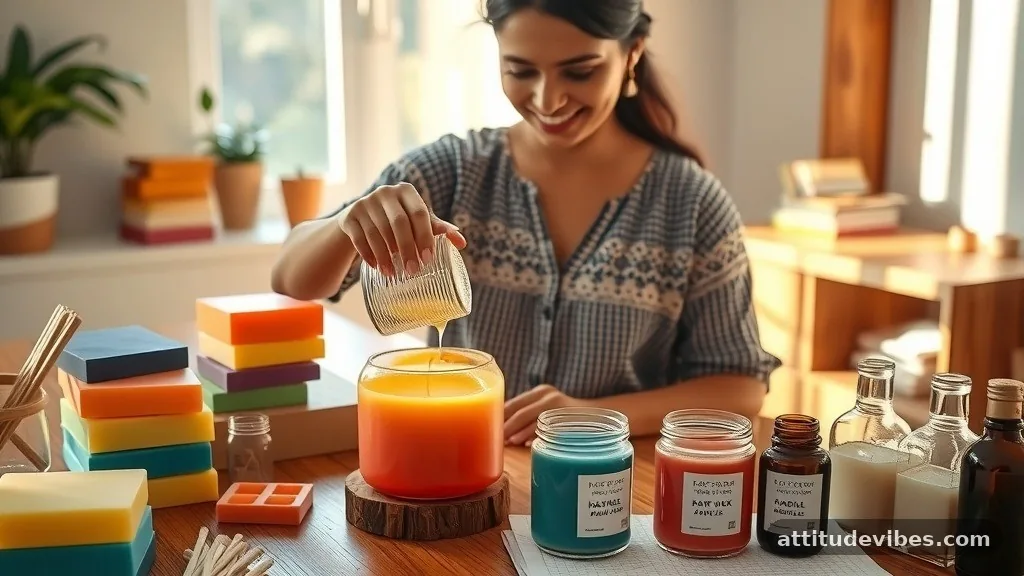
The candle market in India has shifted from being purely functional to becoming a lifestyle-driven industry. Consumers are increasingly seeking premium, scented, and soy-based candles for gifts, meditation, and home fragrance.
Because the raw materials are relatively affordable, the profit margins for homemade candles can range from 30% to 50% depending on your branding and sales channel. You aren’t just selling wax; you are selling an experience, which allows for higher price points than mass-produced alternatives.
Success in this business depends on identifying a niche that resonates with local buyers. Some entrepreneurs focus on luxury soy candles with minimalist packaging, while others target the festive market with decorative, colored, and uniquely shaped candles.
By positioning your products as high-quality, artisanal items, you can command prices that reflect the time and care put into the manufacturing process. The key is to maintain consistency in scent throw and burn quality, as these are the two metrics that lead to repeat customers and positive word-of-mouth.
Sourcing Quality Raw Materials
To build a reputable brand, you must prioritize the quality of your base materials. Paraffin wax is the most common and cheapest option, but there is a growing consumer preference for soy wax and beeswax, which are considered cleaner and more sustainable.
You will need to source reliable suppliers for your wicks, fragrance oils, and essential oils to ensure your products don’t produce soot or toxic fumes. Building a relationship with a local wholesaler can help you keep production costs low while maintaining high standards.
When selecting your materials, consider the following list of essential items you will need to procure before your first batch:
- High-quality wax: Choose between soy, beeswax, or paraffin based on your target price point.
- Fragrance oils: Invest in phthalate-free oils for a premium, long-lasting scent.
- Wicks: Ensure you match the wick size to the diameter of your candle container for an even burn.
- Containers: Glass jars, tins, or ceramic vessels contribute significantly to your brand’s aesthetic.
- Thermometer: Precision is vital for melting wax at the right temperature to avoid cracks or air bubbles.
Navigating Legal and Registration Requirements
Operating a business in India requires adherence to standard regulatory frameworks to ensure your enterprise is legitimate. You do not necessarily need a complex business structure to begin, but registering as a Sole Proprietorship is a common and straightforward path for most home-based makers.
Obtaining a Udyam Registration through the Ministry of Micro, Small and Medium Enterprises is highly recommended, as it provides official recognition and access to government benefits. This registration is free of charge and can be completed entirely online.
Beyond basic registration, you should consider obtaining a GST number once your annual turnover crosses the mandated threshold, which is currently ₹40 lakhs for most goods-based businesses. While you might start small, having your tax compliance in order from the beginning prevents future headaches as your brand scales.
Additionally, if you plan to sell through major e-commerce platforms, they will require a GST certificate and a bank account in the business name. Keeping your personal and business finances separate is the smartest way to track your actual profitability.
Developing a Production Workflow
Efficiency is the secret to scaling a candle-making business without burning out. You need a dedicated workspace that is clean, ventilated, and free from dust, as even small particles can ruin the finish of a candle.
Start by creating a production schedule that allows you to batch-process your candles rather than making them one by one. This approach saves time on setup and cleanup, allowing you to produce more units in a shorter window.
| Stage | Key Focus | Time Investment |
|---|---|---|
| Preparation | Cleaning jars and setting wicks | 15-20 minutes |
| Melting | Monitoring wax temperature | 30-45 minutes |
| Pouring | Ensuring level surfaces | 10-15 minutes |
| Curing | Letting candles set undisturbed | 24-48 hours |
Curing is perhaps the most overlooked part of the process. Even if a candle looks ready after a few hours, the wax needs time to stabilize and the fragrance oils need to bind fully with the wax.
Rushing this stage often results in a poor scent throw, which can disappoint customers who expect a strong fragrance. By building a 48-hour curing window into your production cycle, you ensure that every candle you ship meets a professional standard.
Building Your Brand Online
In the modern Indian market, your digital presence is your storefront. Instagram and Pinterest are particularly effective for visual products like candles, as they allow you to showcase your packaging, scent profiles, and the “vibe” of your brand through high-quality photography.
Don’t just post pictures of the candles; show the process, the inspiration, and the people behind the product. People buy from people, and building a narrative around your brand helps establish trust.
When you start an online store, you have a few options ranging from social media DMs to dedicated e-commerce websites. Many creators start by selling via Instagram or WhatsApp, which incurs zero platform fees.
As you grow, you might transition to a website using platforms like Shopify or WooCommerce to automate payments and shipping. Regardless of the platform, ensure your shipping process is robust, as candles are fragile and require careful bubble wrapping to survive the transit through Indian courier networks.
FAQ About Starting Your Business
Do I need a special license to sell candles from home?
For a small, home-based business in India, you generally do not need a specific “candle license.” However, you should register as a sole proprietorship and obtain a Udyam certificate to legitimize your business for tax and banking purposes.
Is it possible to be profitable in the first three months?
Yes, many makers reach a break-even point within their first few months by focusing on local markets, gifting segments, and social media sales. Profitability largely depends on how well you manage your material costs and your ability to reach customers without spending heavily on ads.
What is the most important factor for success?
Consistency is key. Whether it is the scent, the burn time, or the packaging, customers will return only if they know exactly what quality to expect every time they order from you.
How do I handle shipping fragile glass candles?
Use high-quality double-walled corrugated boxes and plenty of bubble wrap. It is also helpful to test your packaging by shipping a few trial boxes to friends in different cities to see how they hold up during transit.
Should I focus on soy wax or paraffin?
Soy wax is currently the preferred choice for premium, eco-conscious brands in India. While it is slightly more expensive than paraffin, it allows you to charge a higher price point and appeal to a more discerning audience.
Growing Your Homemade Candle Brand
Starting a homemade candle business in India requires a blend of creative passion and disciplined business habits. By focusing on quality materials, efficient production workflows, and a strong visual brand, you can build a sustainable income stream from the comfort of your home. The market is constantly evolving, so stay curious about new scent trends and packaging styles that catch the eye of the modern consumer.
Remember that your first few batches are a learning experience. You will refine your techniques, discover your signature scents, and learn what your customers truly value as you continue on this journey. Take pride in the craftsmanship of your work, as that authenticity is what will distinguish your brand in a crowded marketplace.
Once you have established your base, you can explore wholesale opportunities with local boutiques or seasonal gift hampers for corporate clients. Keep experimenting, stay consistent, and enjoy the process of growing your business.