Securing a home in a new city often feels like a race against time, but knowing the legal documents needed to rent a house in India can save you from significant stress. Whether you are a student moving for university or a professional relocating for a job, having your paperwork in order ensures both your rights and your deposit are protected.
This process moves beyond a simple handshake, relying on formal agreements that define the relationship between the tenant and the landlord. By preparing the correct identification and financial records early, you can move into your new property without unnecessary delays or legal ambiguity.
Essential Identity and Verification Documents
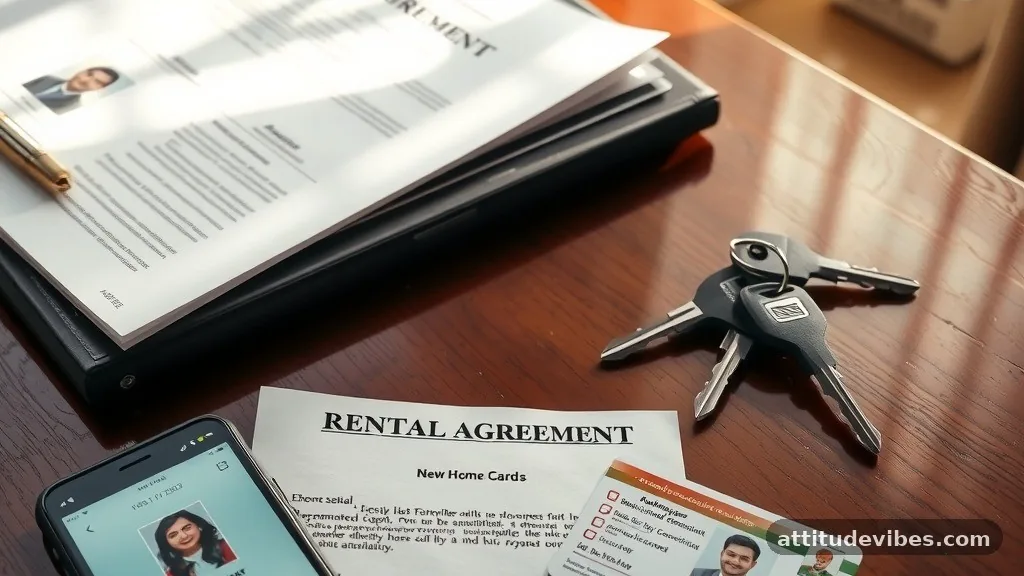
When you begin the process of renting a house, the primary hurdle is establishing your identity. Landlords in India are legally and socially responsible for verifying the background of their tenants, which makes your identification documents the most critical items to have ready. You should keep digital and physical copies of your government-issued IDs, as these will be requested immediately upon expressing interest in a property.
The most commonly accepted form of identification is the Aadhaar Card, which serves as the primary proof of identity and address across all states in India. Most property owners will also accept a valid PAN Card or a Driving License if you prefer not to share your Aadhaar details initially. If you are a foreign national, you must provide a valid passport along with your Residential Permit or visa documents to satisfy local police verification requirements.
Police verification is a mandatory step in many Indian cities, particularly in metropolitan areas like Delhi, Mumbai, and Bangalore. You will need to submit a copy of your ID and two passport-sized photographs to the local police station, often through the landlord’s mediation.
Providing these documents promptly speeds up the handover process and builds trust with your landlord. Always ensure that the address on your documents matches your current place of work or your previous residence to avoid complications during the verification check.
Drafting the Rent Agreement
The rent agreement is the cornerstone of any housing arrangement in India. This document serves as the binding contract that outlines the duration of the stay, the monthly rent amount, and the terms regarding the security deposit. A well-drafted lease agreement protects you from sudden rent hikes and ensures that the landlord cannot evict you without reasonable notice.
You should never rely on a verbal contract when renting a house, as it lacks legal standing in a court of law. A formal, written agreement must include the names of both the landlord and the tenant, the property address, and the exact date the tenancy begins. It should also specify who is responsible for utility bills, society maintenance charges, and any potential repairs that might arise during your stay.
Many people choose to use a standard template for these documents, but you should customize it to reflect your specific situation. For instance, if you have pets or require specific parking arrangements, these should be explicitly mentioned in the document.
Once the text is finalized, the agreement must be printed on non-judicial stamp paper of the value prescribed by the state government. This is a crucial step that transforms a draft into a legally enforceable document.
Stamp Duty and Registration Requirements
In India, the enforceability of your rent agreement depends heavily on whether it has been properly stamped and registered. Stamp duty is a tax paid to the state government, and the amount varies depending on the rental value and the duration of the lease. If you are signing a lease for longer than 11 months, registration with the local Sub-Registrar’s office becomes mandatory under the Registration Act of 1908.
While most residential rental agreements are signed for a period of 11 months to avoid the complexity of long-term registration, it is still vital to pay the required stamp duty. Failing to pay the correct stamp duty can render your agreement inadmissible as evidence in a legal dispute. You can check the specific stamp duty rates for your state on the official website of the National Portal of India to ensure you are compliant.
Registration provides an extra layer of security by creating a public record of your tenancy. This is particularly useful if you need to apply for a gas connection, a new electricity meter, or a bank account address update.
Although it involves an additional fee, the peace of mind offered by a registered document is worth the investment. Always keep the original, stamped, and signed copy of the agreement in a safe place for the duration of your stay.
Financial Records and Payment Proofs
Managing the financial aspect of renting requires careful documentation of every transaction. Before moving in, you will likely be asked to pay an advance rent and a security deposit. It is essential to record these payments through transparent channels like bank transfers, cheques, or digital payment platforms rather than cash.
Your landlord should provide a formal receipt for the security deposit, which is typically equal to one to three months of rent. This receipt should clearly state the amount paid, the date, and the conditions under which the deposit will be refunded when you eventually move out. Keeping a digital trail of your monthly rent payments is equally important for tax purposes, especially if you are claiming House Rent Allowance (HRA) from your employer.
| Document Type | Purpose | Mandatory Status |
|---|---|---|
| Rent Agreement | Legal terms of stay | Highly Recommended |
| Security Deposit Receipt | Proof of refund claim | Essential |
| Police Verification Form | Background check | Mandatory in most cities |
| Bank Statement/Transfer Log | Proof of payment | Recommended |
Maintaining these financial records helps prevent disputes regarding unpaid rent or withheld deposits. If you pay via bank transfer, ensure that the “remark” section of the transaction mentions the month for which the rent is being paid. This simple habit eliminates any confusion if the landlord’s accounting records do not match your own.
Additional Documents for Specific Situations
Depending on the nature of the property and your specific situation, you may need additional documentation. If you are renting a house that is part of a cooperative housing society, you might be required to submit a “No Objection Certificate” (NOC) from the society management. This document confirms that the society is aware of your tenancy and has no objections to your residency.
For employees moving for work, some landlords may request a copy of your employment offer letter or a professional identity card. This serves as a quick verification of your background and your ability to pay rent consistently. Students often need to provide a letter from their college or university, especially if they are moving into a hostel or a shared apartment managed by an institution.
If you are renting a house that is fully furnished, you should also create an inventory list. This document details all the appliances, furniture, and fixtures present in the house, along with their current condition. Having both the landlord and the tenant sign this inventory list protects you from being held liable for pre-existing damages when your lease ends.
- Copy of the property deed or electricity bill (to verify landlord ownership)
- NOC from the housing society (if applicable)
- Inventory list for furnished properties
- Employer reference or student ID card
- Signed copy of the house rules or bylaws
Frequently Asked Questions
Is a notary stamp enough for a rent agreement?
A notary stamp serves to verify the identities of the people signing the document, but it does not replace the requirement for stamp duty. For an agreement to be legally valid and enforceable, it must be printed on the appropriate value of non-judicial stamp paper required by your state.
What happens if I lose my copy of the rent agreement?
If you lose your copy, you should immediately request a duplicate from your landlord. If the agreement was registered, you can visit the local Sub-Registrar’s office to obtain a certified copy by paying a nominal fee.
Can a landlord refuse to refund my security deposit?
A landlord cannot arbitrarily refuse to refund your deposit unless there is a breach of the agreement or significant damage to the property beyond normal wear and tear. Your signed receipt and the terms listed in the agreement are your primary defense in such a dispute.
Is it mandatory to register an 11-month rent agreement?
In most Indian states, an 11-month lease does not require mandatory registration, as it is considered a leave-and-license agreement rather than a lease. However, paying the correct stamp duty remains a mandatory requirement to ensure the document is legally admissible.
What documents should I ask from my landlord?
You should ask for a copy of the property tax receipt or the most recent electricity bill to confirm that the person renting the house is indeed the owner or has the legal authority to sublet the premises. This helps prevent fraud and ensures you are dealing with the rightful party.
Conclusion
Securing a home requires diligence, but the process becomes much simpler when you know exactly what is required. By keeping your identity proofs, financial records, and a properly stamped rent agreement in order, you ensure a smooth transition into your new space. Remember that the legal documents needed to rent a house in India are designed to protect both parties, so treating this paperwork with seriousness is in your best interest.
Always verify the ownership of the property and ensure that all verbal promises are converted into written clauses within your contract. By following these steps, you minimize the risk of future conflicts and set a positive tone for your residency. If you have any remaining doubts about specific state laws, consulting a local professional is always a wise final step before signing.